
Ingredients
Method
- Toast the Panko: In a small skillet, melt 1 tablespoon butter over medium heat. Add 3-4 tablespoons panko bread crumbs and cook, stirring constantly, for 2-3 minutes until golden brown and fragrant. Transfer to a plate and let cool completely. This adds extra flavor and ensures crispy crab cakes.
- Pick Over the Crabmeat: Spread the crabmeat on a plate and carefully pick through it with your hands to remove any cartilage or shell fragments. Be gentle—you want to keep the lumps intact. Place picked crabmeat in a large bowl.
- Make the Crab Cake Mixture: To the bowl with crabmeat, add the beaten egg, mayonnaise, Dijon mustard, Old Bay seasoning, minced herbs, and a sprinkle of salt and pepper. Gently fold together with a spatula—don't overmix or you'll break up the crab lumps. Add 2 tablespoons of the toasted panko and gently fold to combine. The mixture should just hold together when you form a cake. If it's too wet, add another tablespoon of panko. If it's too dry, add a tiny bit more mayo. You want the minimum amount of binder—just enough to hold the cakes together.
- Chill the Mixture (Optional but Recommended): Cover the bowl and refrigerate for 30 minutes to 2 hours. This makes the mixture easier to handle and helps the cakes hold together during cooking. You can also refrigerate the mixture without the panko for up to 4 hours, then add panko right before forming cakes.
- Make the Garlic Aioli (Whisk Method):In a medium bowl, whisk together egg yolks, microplaned garlic, lemon juice, and a pinch of salt until combined.While whisking constantly, add the olive oil in a very slow, steady stream—drop by drop at first, then in a thin drizzle once the emulsion begins to form. The aioli should thicken and become pale and creamy. Continue whisking until all the oil is incorporated and the mixture holds stiff peaks.Whisk in lemon zest, minced chives, tarragon, and cayenne. Taste and season with salt and black pepper. The aioli should be bright, lemony, and garlicky but balanced.Add 1 tablespoon water and whisk. Check consistency—it should be thin enough to drizzle from a squeeze bottle but still have body. Add another tablespoon of water if needed.If the aioli breaks (separates and looks curdled), start with a fresh egg yolk in a clean bowl and slowly whisk the broken aioli into it to re-emulsify.Transfer to a squeeze bottle or small bowl. Refrigerate until ready to use. Make this at least 30 minutes ahead so flavors meld. Keeps for up to 3 days refrigerated.Make the Garlic Aioli (Blender Method):In a blender or food processor, combine egg yolks, microplaned garlic, lemon juice, and a pinch of salt. Blend for 10 seconds to combine.With the blender running on low speed, add the olive oil in a very slow, steady stream through the feed tube—start with just a few drops, then increase to a thin stream once the emulsion begins. The aioli should thicken and become pale and creamy. Continue blending until all the oil is incorporated.Add lemon zest, minced chives, tarragon, and cayenne. Pulse a few times to combine—don't over-blend or the herbs will turn the aioli green and muddy.Taste and season with salt and black pepper. The aioli should be bright, lemony, and garlicky but balanced.Add 1 tablespoon water and pulse to combine. Check consistency—it should be thin enough to drizzle from a squeeze bottle but still have body. Add another tablespoon of water if needed.If the aioli breaks, add a fresh egg yolk to the blender and blend on low while slowly adding the broken aioli through the feed tube to re-emulsify.Transfer to a squeeze bottle or small bowl. Refrigerate until ready to use. Make this at least 30 minutes ahead so flavors meld. Keeps for up to 3 days refrigerated.
- Form the Mini Crab Cakes: Put the flour on a plate and season with salt and pepper. Stir to combine. When ready to cook, form the crab mixture into small cakes about 1.5 inches across and 1/2 inch thick—silver dollar size for amuse-bouche, or 2-3 inches for appetizer portions. You should get 16-20 mini cakes or 8 larger cakes. Work gently so you don't break up the crab lumps. Dredge both sides of each cake lightly in the seasoned flour, shaking off excess. The flour creates a barrier that helps the cakes brown without sticking. Place formed cakes on a plate or baking sheet.
- Sear the Crab Cakes: Heat a large skillet over medium-high heat. Add 2 tablespoons butter and 2 tablespoons olive oil. When the butter melts and starts to foam, carefully add the crab cakes to the pan. Don't overcrowd—work in batches if necessary, keeping the first batch warm in a 200°F oven. Cook without moving them for 3-4 minutes until the bottom is deeply golden brown and crispy. Carefully flip with a spatula and cook the other side for 3-4 minutes until golden and crispy. Adjust heat as needed so they don't burn—medium-high should give you a good sear without burning. The crab is already cooked, so you're just browning the exterior and heating through. Transfer to a paper towel-lined plate to drain briefly.
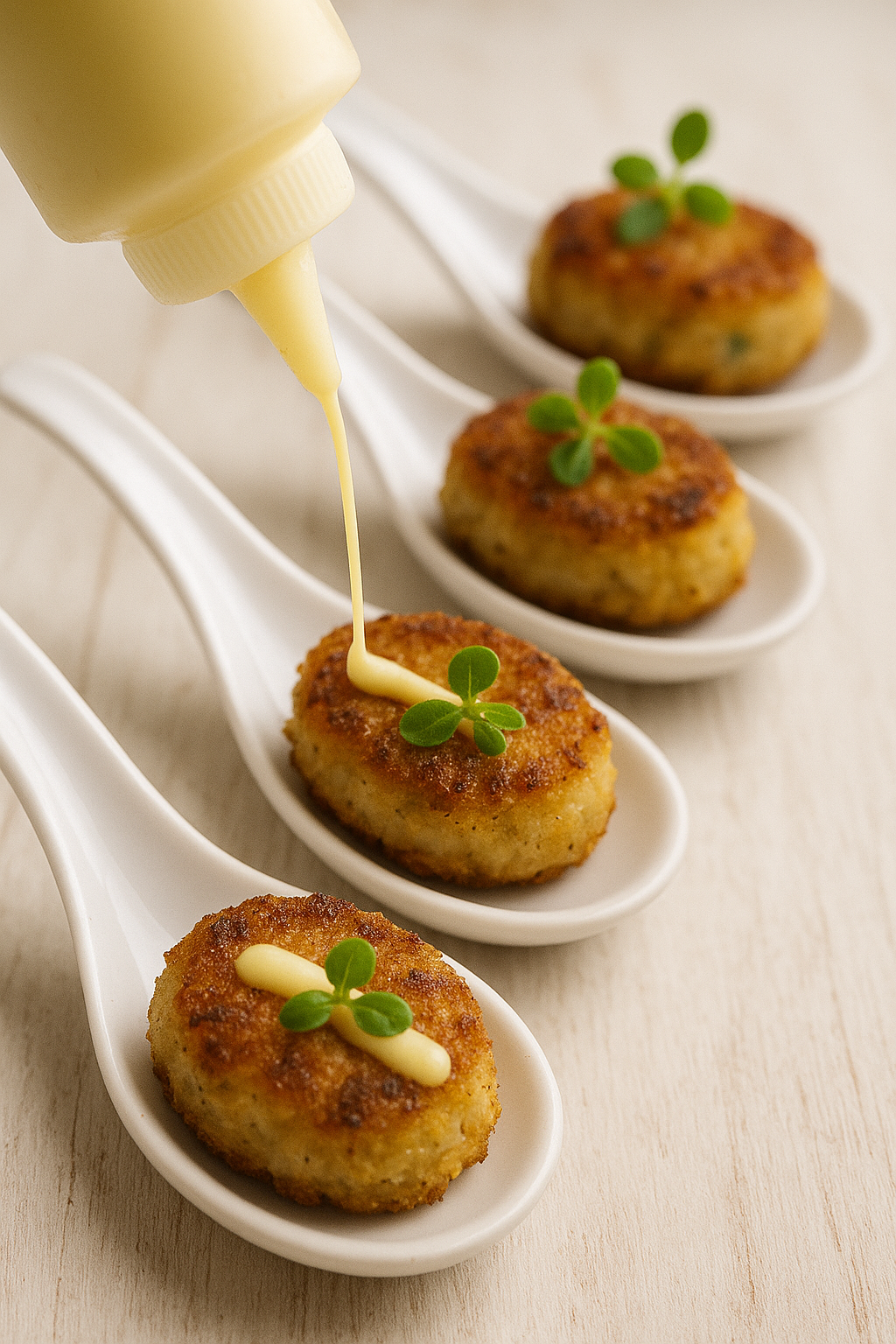
- Plate and Serve: For amuse-bouche presentation, place one mini crab cake on a small spoon, slate tile, or tiny plate. Drizzle a thin zigzag of lemon-herb aioli over the top using the squeeze bottle. Top with a small microgreen or chive tip. Grate a tiny bit of fresh lemon zest over the top. Serve immediately while the crab cakes are hot and crispy. Alternatively, serve on small plates with a smear of aioli on the plate, the crab cake on top, dots of aioli around the plate, and a lemon wedge on the side.
Notes
Yield: Makes 16-20 mini crab cakes (amuse-bouche size) or 8 larger crab cakes (appetizer size). Mini cakes are 1-2 bites each. Larger cakes are 3-4 bites.
Choosing Crabmeat: Use fresh lump or jumbo lump crabmeat for the best texture and flavor. The pieces are bigger and the texture is better. Avoid claw meat or canned crab—the flavor is inferior and the texture is stringy. If you can find fresh Maryland blue crab, that's ideal. Pasteurized crabmeat in containers works well and is what most restaurants use. Check the sell-by date and smell it—fresh crab should smell sweet and oceanic, not fishy or sour.
Picking Over Crabmeat: Always pick through crabmeat with your hands before using. Even the best quality crab can have small pieces of shell or cartilage. Be gentle—keep the lumps intact. This step is tedious but essential. Nobody wants to bite down on a piece of shell.
More Crab, Less Filler: The goal is crab cakes that taste like crab, not breadcrumbs. Use the minimum amount of panko needed to hold the cakes together. Start with 2 tablespoons and add more only if absolutely necessary. The mixture should be barely held together, not dense and bready. This is what separates restaurant crab cakes from home versions.
Why Toast the Panko: Toasting panko in butter before adding it to the mixture serves two purposes. First, it adds flavor—the butter makes the breadcrumbs taste richer. Second, it dries out the panko slightly, which helps absorb moisture and bind the mixture without making it gummy. This is a professional technique that makes a noticeable difference.
Old Bay is Essential: Old Bay seasoning is the classic Maryland crab cake spice blend. It contains celery salt, paprika, mustard, and other spices. If you don't have Old Bay, substitute with 1/2 teaspoon paprika, 1/4 teaspoon celery salt, 1/4 teaspoon dry mustard, and a pinch of cayenne. But honestly, just buy Old Bay—it's perfect and it's cheap.
Fresh Herbs: Fresh parsley or chives add brightness. Don't use dried herbs—they taste dusty and don't add the same fresh flavor. If you can't find fresh herbs, leave them out rather than using dried.
Chilling the Mixture: Refrigerating the crab mixture for 30 minutes to 2 hours makes it much easier to form into cakes. The mixture firms up and holds together better. If you're in a rush, you can skip this, but chilled mixture is easier to work with. You can also make the mixture a few hours ahead (without the panko), refrigerate, then add panko and form cakes right before cooking.
Forming Mini Cakes: For amuse-bouche, make them small—about 1.5 inches across and 1/2 inch thick. Use a small cookie scoop or tablespoon measure to portion them evenly. Handle gently. The mixture is delicate. If a cake falls apart while forming, just press it back together gently. Don't compact them too much or they'll be dense.
Flour for Dredging: The light coating of seasoned flour creates a barrier between the delicate crab cake and the hot pan. It helps prevent sticking and creates a thin crust that browns beautifully. Don't skip this step. Shake off excess flour—you want a light dusting, not a thick coating.
Searing Temperature: Medium-high heat is the sweet spot. Too hot and the outside burns before the inside heats through. Too cool and the cakes don't develop a crispy crust. You want a good sizzle when the cakes hit the pan. If the butter starts smoking, reduce heat slightly.
Butter and Oil Combination: Using both butter and olive oil for searing gives you the best of both worlds. Butter adds flavor. Olive oil has a higher smoke point and prevents the butter from burning. The combination creates a flavorful, golden crust without burning.
Don't Move Them: Once you place the crab cakes in the pan, don't touch them for 3-4 minutes. Let a crust form. If you try to flip them too early, they'll stick and fall apart. When properly seared, they release from the pan easily. If they're sticking, they need more time.
Working in Batches: Don't overcrowd the pan. The cakes need space around them so they sear instead of steam. Cook 4-6 at a time depending on your pan size. Keep the first batch warm in a 200°F oven on a baking sheet while you cook the rest.
Lemon-Herb Aioli Consistency: The aioli needs to be thin enough to drizzle from a squeeze bottle but thick enough to have body and not run all over the plate. Start with 1 tablespoon of water and add more if needed. Test by squeezing a little onto a plate—it should drizzle in a controlled line, not splatter or pool. If it's too thick, add more water, 1 teaspoon at a time.
Make Ahead Aioli: The aioli tastes better when made at least 30 minutes ahead so the flavors meld. You can make it up to 2 days ahead and store in the fridge. Bring to room temperature and whisk before using. Add the water to thin right before serving.
Garlic in Aioli: Use a microplane to grate the garlic into a paste. This distributes the garlic evenly and prevents big bites of raw garlic. If you don't have a microplane, mince the garlic as finely as possible, then mash it with a pinch of salt to make a paste.
Aioli Variations:
- Spicy Aioli: Add 1 teaspoon sriracha or hot sauce
- Caper Aioli: Add 1 tablespoon minced capers
- Dill Aioli: Replace tarragon with fresh dill
- Remoulade: Add 1 tablespoon minced pickles, 1 teaspoon capers, 1 teaspoon Creole mustard, dash of hot sauce
- Shrimp Cakes: Replace crab with 1 pound peeled raw shrimp, pulsed in a food processor until chopped but not pureed
- Salmon Cakes: Replace crab with 1 pound cooked flaked salmon
- Add Vegetables: Fold in 1/4 cup finely diced red bell pepper or celery for crunch
- Spicy Version: Add 1 teaspoon sriracha or 1 minced jalapeño to the mixture
- Corn and Crab Cakes: Fold in 1/4 cup cooked corn kernels
- Cakes fall apart while cooking: The mixture was too wet or you didn't chill it long enough. Add more panko next time and refrigerate for at least 30 minutes before forming.
- Cakes are dense and bready: Too much panko. Use less next time—just enough to barely hold them together.
- Cakes stick to the pan: Pan wasn't hot enough or you moved them too soon. Wait until a crust forms and they release naturally.
- Cakes burn on the outside but are cold inside: Heat too high. Reduce to medium heat and give them more time per side.
- Can't taste the crab: Not enough crab or too much filler. Use more crab and less panko next time. Make sure you're using good quality lump crabmeat.
- Aioli is too thick: Add more water, 1 teaspoon at a time, until it drizzles easily from a squeeze bottle.