
Ingredients
Method
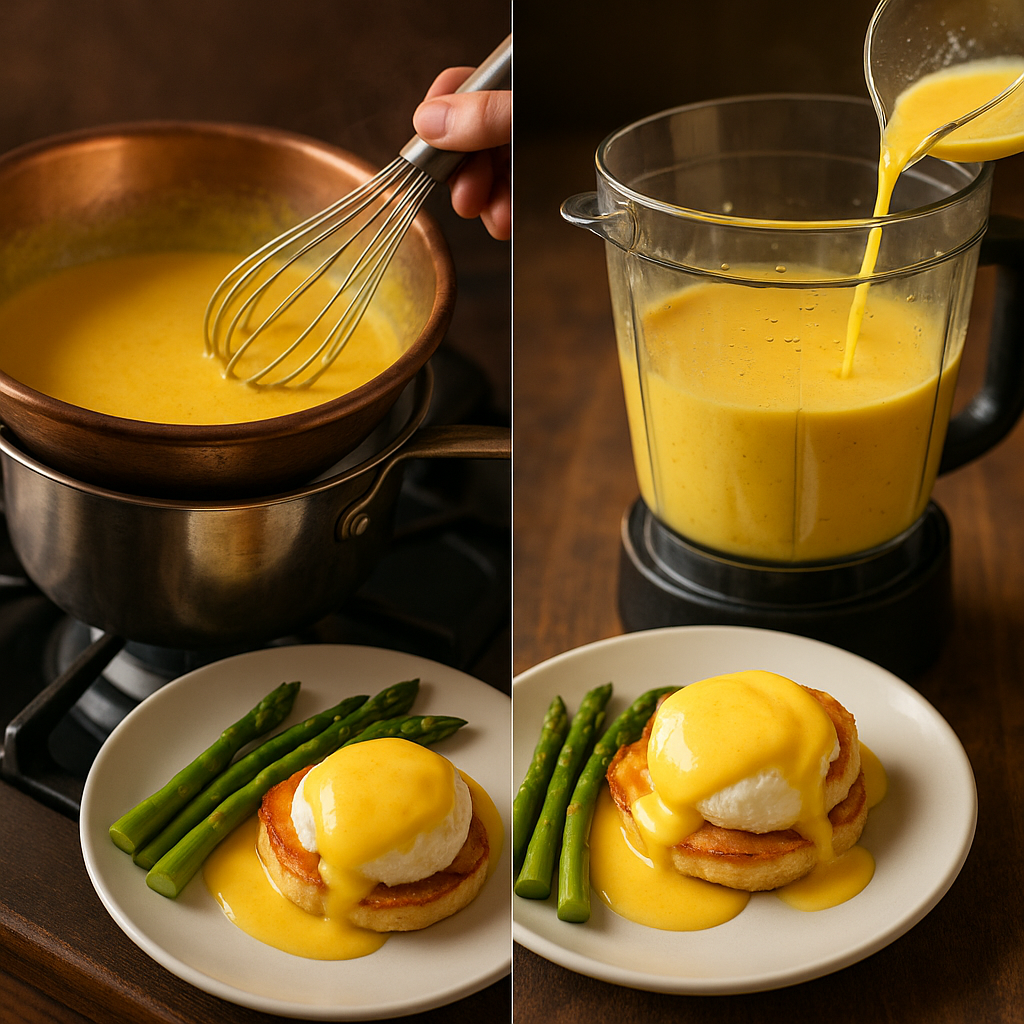
Classic French Method (Double Boiler)
- Prepare the Double Boiler:Fill a medium saucepan with 2 inches of water and bring to a simmer over medium heat. Place a heatproof bowl on top—the bowl should not touch the water. Reduce heat to low so the water barely simmers. This gentle heat is critical. Too hot and the eggs scramble. Keep it at a whisper.
- Melt the Butter:Melt the butter slowly in a small saucepan over low heat. Don't let it boil—you want the moisture to stay in the butter. Set aside and keep warm.
- Whisk the Egg Yolks:Add egg yolks, lemon juice, and 1/4 teaspoon salt to the bowl over the double boiler. Whisk constantly for 2-3 minutes. The mixture will thicken and become pale yellow—it should coat the back of a spoon and leave a trail when you drag your finger through it. This is the ribbon stage. The yolks are now cooked enough to be safe and thick enough to hold the butter.
- Add the Butter:Remove the bowl from heat. While whisking constantly, add the melted butter in a very thin stream—just a drizzle. Start with a few drops, whisk until incorporated, then continue with a thin, steady stream. Don't rush. The slower you add butter, the better the emulsion. If the sauce starts to look greasy or separated, stop adding butter and whisk vigorously until smooth, then continue.
- Season and Adjust:Whisk in remaining 1/4 teaspoon salt and cayenne if using. Taste and adjust lemon juice or salt. If the sauce is too thick, whisk in warm water 1 teaspoon at a time until you reach desired consistency. The sauce should coat a spoon but still pour. Keep warm (not hot) until serving—place the bowl back over the warm water bath (heat off) or in a 200°F oven. Stir occasionally. Use within 30 minutes.
Easy Blender Method
- Melt the Butter:Melt the butter slowly in a small saucepan over low heat. Don't let it boil—you want the moisture to stay in the butter. Transfer to a glass measuring cup with a spout for easy pouring.
- Blend the Egg Yolks:Add egg yolks, lemon juice, 1/4 teaspoon salt, and cayenne (if using) to your blender. Blend on medium-high speed for exactly 30 seconds. Use a timer or count out loud. This step heats the yolks slightly from the friction of the blades and gives the sauce body. The mixture will lighten in color.
- Add the Butter:Remove the center plug from the blender lid. Turn blender to low speed. With the blender running, slowly drizzle the melted butter through the opening in a thin, steady stream. Start with just a few drops, then continue in a thin stream. This takes 30-60 seconds. Don't dump it all in at once. After all the butter is added, blend for 5 more seconds.
- Season and Adjust:Turn off the blender. Taste the sauce. Add remaining 1/4 teaspoon salt if needed, or more lemon juice to taste. If the sauce is too thick, add warm water 1 teaspoon at a time and pulse to incorporate. The sauce should coat a spoon but still pour. Transfer to a bowl and keep warm in a 200°F oven or near the stove. Use within 30 minutes.
Notes
Which Method Should You Use?
Hollandaise is an emulsion—egg yolks suspend butter in liquid. It breaks when:
If your sauce looks curdled, greasy, or separated:
Don't skip or rush this step in the blender method. Blending the egg yolks for a full 30 seconds before adding butter does two things: (1) heats the yolks slightly from friction, which helps them emulsify, and (2) incorporates air, which makes the sauce lighter. If you skip this or only blend for 10 seconds, your sauce will be runny. Butter Temperature:
The melted butter should be warm but not hot—around 120-140°F. Too hot and it scrambles the eggs. Too cool and it won't emulsify properly. If your butter is barely warm, the sauce won't thicken. If it's scorching hot, it will break. Warm to the touch is perfect. Don't Let the Butter Boil:
When melting butter, use low heat. If the butter boils, water evaporates out. That water is important—it helps the emulsion form. Melt slowly, keep the moisture in. Storing Hollandaise:
Hollandaise doesn't store well. It's best made fresh and used within 30 minutes. You can keep it warm on top of a double boiler (water barely simmering, heat on low) or in a 200°F oven. Stir occasionally to prevent separation. If you must store leftovers, refrigerate in an airtight container for up to 2 days (1 day is better). Hollandaise can be frozen but we don't recommend it—the texture suffers. Reheating Hollandaise:
Reheat gently or it will break. Place hollandaise in a heatproof bowl over a pot of barely simmering water (double boiler). Stir constantly until just warmed through—not hot. Or reheat in 5-second bursts in the microwave at 50% power, stirring between each burst. Raw Eggs:
This sauce contains raw or lightly cooked egg yolks. The classic method heats yolks to about 140-160°F (pasteurization happens at 140°F if held for 3 minutes). The blender method heats yolks less. Use fresh, high-quality eggs. If you're concerned, use pasteurized eggs. Salted vs Unsalted Butter:
Use unsalted butter so you control the salt level. If using salted butter, skip the added salt and taste at the end. Lemon Juice:
Fresh lemon juice is essential. Bottled lemon juice tastes flat and artificial. Use fresh. If you want more lemon flavor, add an extra teaspoon at the end. Some people like hollandaise very lemony, others more subtle. Cayenne is Traditional:
A pinch of cayenne is classic in hollandaise. It adds subtle heat and complexity. You won't taste it as "spicy"—it just makes the sauce more interesting. Optional but recommended. Don't Add Salt While Cooking:
Add salt at the end after tasting. Salt in the beginning can make the sauce too salty if it reduces or concentrates. Common Uses:
You can prep ingredients ahead—separate eggs, melt butter, juice lemon—but make the sauce just before serving. It doesn't hold well. Troubleshooting:
Hollandaise from a packet or jar tastes like chemicals and costs more than making it from scratch. This recipe uses 5 ingredients you already have. It takes 10 minutes. It tastes like butter and lemon and eggs—pure, clean, rich. No artificial thickeners, no preservatives, no weird aftertaste. Professional Technique:
The classic French method is how hollandaise has been made for 200 years. Master it and you understand emulsions—the foundation of mayonnaise, béarnaise, and dozens of other sauces. The blender method uses modern tools to achieve the same result faster. Both are legitimate. Use what works for you.
- Classic French Method: Use when you want to practice technique, have time, and want complete control. This is the traditional way. It requires constant whisking and attention but teaches you emulsion fundamentals. More meditative, more satisfying when it works.
- Blender Method: Use when you want fast, foolproof hollandaise with minimal effort. Perfect for busy mornings or when making eggs Benedict for a crowd. Nearly impossible to break if you follow the steps. Same result, less technique required.
Hollandaise is an emulsion—egg yolks suspend butter in liquid. It breaks when:
- Eggs get too hot (they scramble)
- Butter added too fast (emulsion can't form)
- Temperature too high (proteins seize up)
- Wrong ratio of yolks to butter
If your sauce looks curdled, greasy, or separated:
- Method 1: Start with 1 fresh egg yolk in a clean bowl. Whisk the egg yolk, then slowly whisk in the broken sauce bit by bit until it comes together.
- Method 2: Add 1 tablespoon of very cold water to the broken sauce and whisk vigorously. The cold water can help re-emulsify.
- Method 3 (blender only): Add 1 fresh egg yolk to the blender, blend for 30 seconds, then slowly pour the broken sauce back in while blending on low.
Don't skip or rush this step in the blender method. Blending the egg yolks for a full 30 seconds before adding butter does two things: (1) heats the yolks slightly from friction, which helps them emulsify, and (2) incorporates air, which makes the sauce lighter. If you skip this or only blend for 10 seconds, your sauce will be runny. Butter Temperature:
The melted butter should be warm but not hot—around 120-140°F. Too hot and it scrambles the eggs. Too cool and it won't emulsify properly. If your butter is barely warm, the sauce won't thicken. If it's scorching hot, it will break. Warm to the touch is perfect. Don't Let the Butter Boil:
When melting butter, use low heat. If the butter boils, water evaporates out. That water is important—it helps the emulsion form. Melt slowly, keep the moisture in. Storing Hollandaise:
Hollandaise doesn't store well. It's best made fresh and used within 30 minutes. You can keep it warm on top of a double boiler (water barely simmering, heat on low) or in a 200°F oven. Stir occasionally to prevent separation. If you must store leftovers, refrigerate in an airtight container for up to 2 days (1 day is better). Hollandaise can be frozen but we don't recommend it—the texture suffers. Reheating Hollandaise:
Reheat gently or it will break. Place hollandaise in a heatproof bowl over a pot of barely simmering water (double boiler). Stir constantly until just warmed through—not hot. Or reheat in 5-second bursts in the microwave at 50% power, stirring between each burst. Raw Eggs:
This sauce contains raw or lightly cooked egg yolks. The classic method heats yolks to about 140-160°F (pasteurization happens at 140°F if held for 3 minutes). The blender method heats yolks less. Use fresh, high-quality eggs. If you're concerned, use pasteurized eggs. Salted vs Unsalted Butter:
Use unsalted butter so you control the salt level. If using salted butter, skip the added salt and taste at the end. Lemon Juice:
Fresh lemon juice is essential. Bottled lemon juice tastes flat and artificial. Use fresh. If you want more lemon flavor, add an extra teaspoon at the end. Some people like hollandaise very lemony, others more subtle. Cayenne is Traditional:
A pinch of cayenne is classic in hollandaise. It adds subtle heat and complexity. You won't taste it as "spicy"—it just makes the sauce more interesting. Optional but recommended. Don't Add Salt While Cooking:
Add salt at the end after tasting. Salt in the beginning can make the sauce too salty if it reduces or concentrates. Common Uses:
- Eggs Benedict (poached eggs, Canadian bacon, English muffin)
- Asparagus or broccoli (blanched or steamed)
- Grilled or poached fish (salmon, halibut, cod)
- Roasted vegetables
- Steak (sauce béarnaise is hollandaise with tarragon and shallots)
- Sauce Béarnaise: Add 2 tablespoons tarragon vinegar reduction with shallots and fresh tarragon
- Sauce Maltaise: Add 1 tablespoon blood orange juice and 1 teaspoon orange zest
- Sauce Mousseline: Fold in 2 tablespoons whipped cream at the end
- Sauce Dijon: Whisk in 1 teaspoon Dijon mustard
You can prep ingredients ahead—separate eggs, melt butter, juice lemon—but make the sauce just before serving. It doesn't hold well. Troubleshooting:
- Sauce is too thick: Whisk in warm water 1 teaspoon at a time
- Sauce is too thin (blender method): You didn't blend the yolks for a full 30 seconds, or butter was too cool. Pour sauce into a small saucepan and whisk over very low heat until thickened slightly.
- Sauce is too thin (classic method): Return to double boiler and whisk over low heat until thickened
- Sauce tastes greasy: You added butter too fast or didn't whisk enough. It's broken. See fixing methods above.
- Sauce curdled: Eggs got too hot. It's broken. See fixing methods above.
- Sauce separated: Emulsion failed. See fixing methods above.
Hollandaise from a packet or jar tastes like chemicals and costs more than making it from scratch. This recipe uses 5 ingredients you already have. It takes 10 minutes. It tastes like butter and lemon and eggs—pure, clean, rich. No artificial thickeners, no preservatives, no weird aftertaste. Professional Technique:
The classic French method is how hollandaise has been made for 200 years. Master it and you understand emulsions—the foundation of mayonnaise, béarnaise, and dozens of other sauces. The blender method uses modern tools to achieve the same result faster. Both are legitimate. Use what works for you.