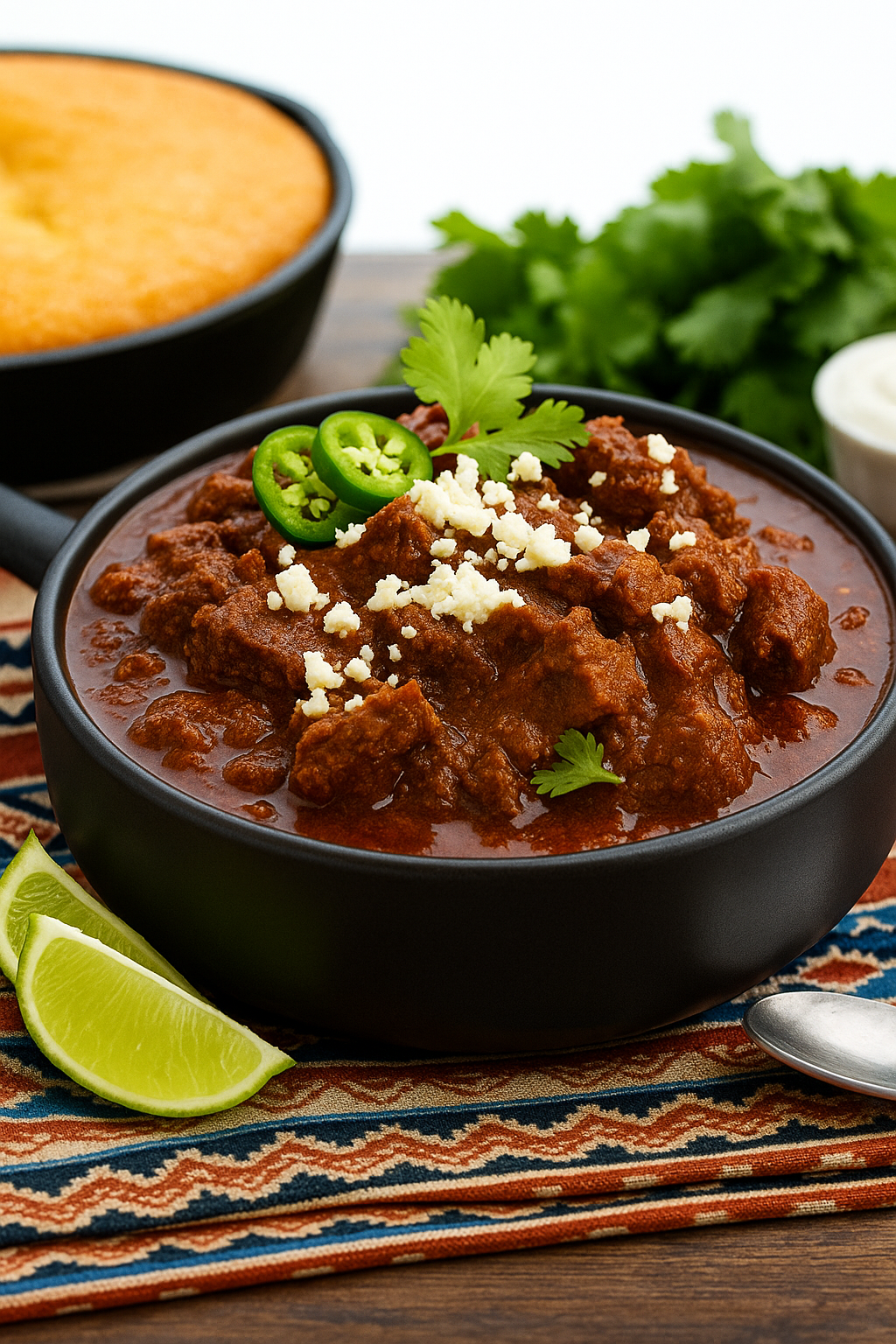
Big chunks of elk chuck braised low and slow until fall-apart tender, with a deep, complex chile sauce built from toasted dried chiles. No beans, no tomato-forward sauce, just pure meat and chiles with backbone from red wine and beef stock. The elk brings a rich, slightly gamey flavor that’s more interesting than beef, and the long braise makes it incredibly tender.
The key is searing the meat hard to build fond, toasting and rehydrating dried chiles to make a paste (game-changer for depth), and braising for 3 hours until the elk is fork-tender. This is a project recipe – not difficult, but it takes time. The result is a thick, rich, intensely flavored chili that’s perfect for cold winters. Serve with cast iron jalapeño cheddar cornbread and all the garnishes.
For the Chili:
- 3½ pounds elk chuck or shoulder – cut into 1-inch cubes
- 3 tablespoons ghee, butter, or oil – for searing
- 2 large yellow onions – diced
- 6 cloves garlic – minced
- 3 dried ancho chiles – stems and seeds removed
- 3 dried guajillo chiles – stems and seeds removed
- 2 tablespoons tomato paste
- 2 tablespoons chili powder – good quality
- 1 tablespoon ground cumin
- 1 teaspoon smoked paprika
- ½ teaspoon cayenne pepper – adjust for heat preference
- 1 cup red wine – Cabernet Malbec, or Zinfandel (something you’d drink)
- 4 cups beef stock
- 2 tablespoons masa harina – optional for thickening
- Salt and black pepper – to taste
For Serving
- Pickled red onions
- Fresh cilantro – chopped
- Lime wedges
- CIA Guacamole
- Cast Iron Jalapeño Cheddar Cornbread
Prepare the Dried Chiles
Heat a dry cast iron skillet or heavy pan over medium heat. Add the dried ancho and guajillo chiles (stems and seeds removed) and toast them for about 2-3 minutes per side until fragrant. You’ll smell them – they become aromatic and slightly pliable. Don’t let them burn or they’ll turn bitter.
Transfer the toasted chiles to a bowl and cover with boiling water. Let them soak for 20-30 minutes until completely softened and rehydrated.
Once soft, drain the chiles (save the soaking liquid) and transfer them to a blender. Add about ½ cup of the soaking liquid and blend until you have a smooth paste. You may need to add more liquid to get it moving. Set the chile paste aside.
Prep the Elk
Pat the elk cubes completely dry with paper towels. This is critical for a good sear. Season generously with salt and black pepper on all sides.
Sear the Elk
Preheat your oven to 300°F (150°C).
Heat a large Dutch oven over medium-high heat. Add 1 tablespoon of ghee, butter, or oil and heat until shimmering – almost smoking.
Working in batches (don’t crowd the pan), sear the elk cubes on all sides until deeply browned – about 2-3 minutes per side. You want a dark, caramelized crust. This builds fond (the brown bits on the bottom) which is pure flavor. Transfer the seared elk to a plate and repeat with the remaining meat, adding more oil as needed between batches.
Build the Chile Base
Reduce heat to medium. Add the diced onions to the Dutch oven with the fond. Cook for 5-7 minutes, stirring occasionally and scraping up all those brown bits, until the onions are softened and translucent.
Add the minced garlic and cook for 1 minute until fragrant.
Add the tomato paste, chili powder, ground cumin, smoked paprika, and cayenne. Stir constantly for 2 minutes – you’re blooming the spices and caramelizing the tomato paste. It should smell incredible and the mixture should darken slightly.
Add the chile paste you made earlier. Stir well to combine everything. Cook for 2-3 minutes, stirring constantly, to develop the flavors.
Deglaze and Braise
Pour in the red wine and scrape the bottom of the pot vigorously with a wooden spoon to get up every bit of fond. Let the wine simmer for 3-4 minutes to cook off the raw alcohol and reduce slightly.
Add the beef stock and stir to combine. Return the seared elk (and any accumulated juices) to the pot. The liquid should come about three-quarters of the way up the meat – add more stock if needed.
Bring to a simmer, then cover the Dutch oven with the lid and transfer to the preheated oven.
Low and Slow Braise
Braise in the oven for 2½ to 3 hours, stirring every 45 minutes or so. The elk is done when it’s fork-tender and easily breaks apart. The meat should be falling apart but still holding its shape in chunks.
After the initial braise time, remove the lid and return the pot to the oven for another 30 minutes uncovered. This reduces and thickens the sauce, concentrating the flavors.
Thicken (Optional)
If the chili is thinner than you’d like after the uncovered braising, you can thicken it with masa harina. Mix 2 tablespoons masa harina with ¼ cup cold water to make a slurry. Stir the slurry into the chili on the stovetop over medium heat and simmer for 5-10 minutes until thickened. Masa adds body and a subtle corn flavor that’s traditional in Texas chili.
Taste and adjust seasoning with salt and pepper.
Serve
Ladle the elk chili into bowls. Top with pickled red onions, fresh cilantro, and a squeeze of lime. Serve with CIA guacamole and cast iron jalapeño cheddar cornbread on the side.
This chili is even better the next day after the flavors have melded. Store leftovers in the refrigerator for up to 4 days, or freeze for up to 3 months.
Elk chuck/shoulder is the perfect cut for braising. It has enough connective tissue and fat to break down during the long, slow cooking, becoming incredibly tender and flavorful. Lean cuts like tenderloin would dry out and toughen – you need a tougher cut for braising.
Searing the meat hard builds fond – those caramelized brown bits on the bottom of the pot. This is where a huge amount of flavor comes from. Don’t skip this step and don’t crowd the pan. Sear in batches so the meat browns instead of steaming.
Toasted and rehydrated dried chiles create incomparable depth and complexity. Store-bought chili powder is fine as a supplement, but the dried chile paste is what makes this special. Ancho chiles are sweet and raisin-y, guajillo chiles are bright and tangy. Together they create layers of flavor you can’t get from powder alone.
Texas-style means no beans. This is about the meat and the chiles. The thick sauce clings to the chunks of tender elk. Beans would dilute the intensity. If you absolutely must have beans, add them in the last 30 minutes of braising (2 cans, drained), but know that purists will judge you.
Red wine + beef stock creates the braising liquid. The wine adds acidity and depth that complements the rich, slightly gamey elk. The beef stock adds body and umami. Beer would work too (dark beer like porter or stout), but red wine is more elegant and works better with game meat.
Low and slow in the oven is better than stovetop. The oven provides even, gentle heat from all sides. On the stovetop, the bottom can scorch and you have to stir constantly. In the oven at 300°F, the chili braises gently and you only need to check it occasionally.
Uncovered at the end reduces and thickens the sauce. After the meat is tender, removing the lid lets moisture evaporate, concentrating the flavors and creating that thick, clingy texture you want in Texas chili.
Masa harina is finely ground corn flour used to make tortillas. Stirred into chili as a slurry, it thickens without adding flour taste and adds a subtle corn flavor that’s traditional. You can find it in the Latin section of most grocery stores.
Finding Elk
If you can’t find elk chuck or shoulder, look for elk stew meat (usually pre-cut shoulder or neck). You can also substitute venison, bison, or even beef chuck – the technique works for any braising cut.
In Utah, elk is often available at specialty butchers, farmers markets, or through hunters. If you hunt, this is an excellent way to use tougher cuts.
Chile Options
If you can’t find dried ancho and guajillo chiles, here are backups:
- Use all ancho chiles (milder, sweeter)
- Use dried New Mexico chiles instead of guajillo
- Skip the dried chiles entirely and use ¼ cup good quality chili powder + 2 tablespoons smoked paprika + 1 teaspoon cayenne
The dried chile method is worth seeking out the chiles, but the powder method still makes great chili.
Spice Level
This recipe is mild to medium heat. To adjust:
- Milder: Skip the cayenne, use only ancho chiles (no guajillo)
- Hotter: Add more cayenne, add a chipotle in adobo to the chile paste, or include fresh jalapeños or serranos when sautéing the onions
Make-Ahead
Chili is always better the next day. Make it up to 3 days ahead and refrigerate. The flavors meld and deepen. Reheat gently on the stovetop, adding a splash of stock if it’s too thick.
Freezing
This chili freezes beautifully. Cool completely, then freeze in portions for up to 3 months. Thaw overnight in the refrigerator and reheat on the stovetop.
Serving Size
This makes a lot – 10 generous servings. Perfect for a crowd or for meal prep. Elk chili reheats beautifully and makes an excellent lunch throughout the week.
Troubleshooting
Meat is tough after braising: You didn’t braise long enough. Elk (and all game meat) can take longer than beef to break down. If it’s still tough at 3 hours, keep braising in 30-minute increments until fork-tender.
Chili is too thin: Remove the lid and simmer on the stovetop for 15-20 minutes to reduce. Or use the masa harina slurry to thicken.
Chili is too thick: Add more beef stock, ¼ cup at a time, until you reach desired consistency.
Too spicy: Serve with extra crème fraîche and guacamole – the dairy and fat cool the heat. Next time, reduce or skip the cayenne.
Not spicy enough: Serve with hot sauce on the side. Or stir in some cayenne or hot sauce into the pot. Taste as you go.
Gamey flavor is too strong: This is less common with farm-raised elk, but if your elk is very gamey (wild-caught, older animal), you can soak the cubed meat in milk for 2-4 hours before cooking. Pat dry thoroughly before searing.
Variations
Beef Chili Use beef chuck instead of elk. Same method, same timing. Slightly less interesting flavor but still excellent.
Venison Chili Venison shoulder or neck works perfectly. Same recipe, same technique.
Beer-Braised Elk Chili Replace the red wine with a dark beer (porter, stout, or brown ale). Adds a malty, slightly bitter note instead of the wine’s acidity.
Smoky Chipotle Elk Chili Add 2-3 chipotle chiles in adobo (from a can) to the chile paste for intense smoke and heat.
Three-Chile Elk Chili Add dried pasilla or chipotle chiles to the ancho and guajillo for even more complexity.
With Beans (Controversial) If you must: Add 2 cans (15 oz each) of drained and rinsed pinto or kidney beans in the last 30 minutes of braising. Texans will disown you, but it’s still delicious.