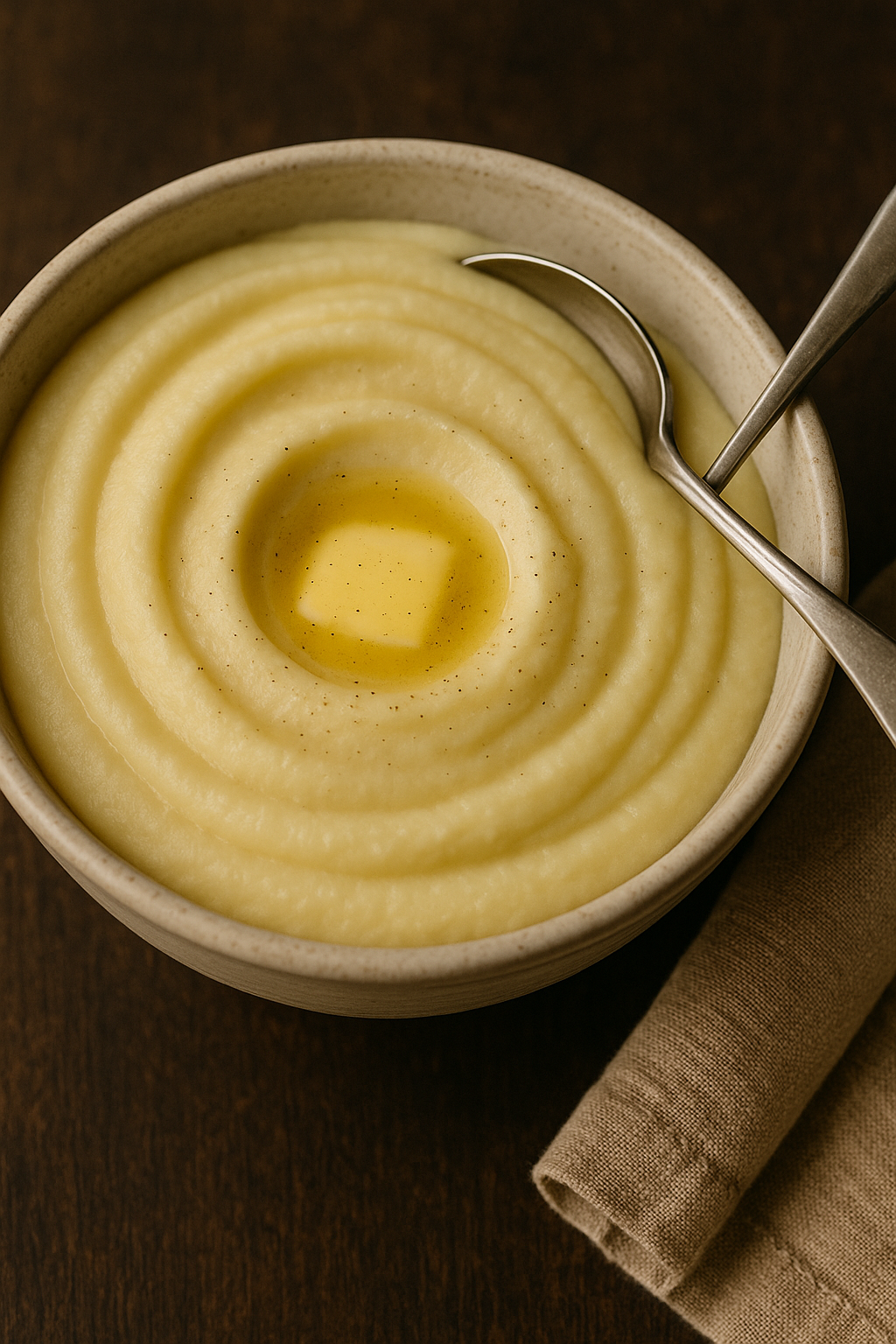
This is pommes purée—French mashed potatoes. Silky, buttery, rich. The kind of mashed potatoes that make you question every batch you’ve made before. This isn’t your Thanksgiving side dish. This is technique-driven, refined, and meant to be the base for sauces like beurre blanc, red wine reductions, or the braising liquid from coq au vin.
The technique matters here. Yukon Gold potatoes for creaminess. Ricing or food mill for smooth texture—no lumps, no gluey starch. Butter and cream in stages for richness. White pepper for seasoning without visible specks. This is what French bistros serve under braised short ribs, pan-seared salmon, or roasted chicken.
Pommes purée is not hard. It just requires attention. Don’t skip the ricing step. Don’t add cold butter. Don’t overwork the potatoes.
- 2 pounds Yukon Gold potatoes
- 1 stick unsalted butter, cut into cubes
- 3/4 cup heavy cream, warmed
- Salt & white pepper
Prep the potatoes. Peel the potatoes and cut them into evenly-sized chunks, about 1 1/2 to 2 inches. Uniform size ensures they cook evenly.Boil the potatoes. Place the potato chunks in a large pot and cover with cold water by about 1 inch. Add a generous amount of kosher salt—the water should taste like the ocean. Bring to a boil over high heat, then reduce to a simmer. Cook until the potatoes are completely tender and falling apart when pierced with a fork, about 15-20 minutes. Don't undercook—they need to be very soft to rice smoothly.Drain well. Drain the potatoes in a colander and let them sit for 1-2 minutes to steam dry. Excess moisture makes the potatoes watery and dilutes the butter and cream. You want them as dry as possible.Rice the potatoes. While the potatoes are still hot, pass them through a potato ricer or food mill back into the pot (or into a large bowl). Work in batches if needed. Do not use a food processor, blender, or electric mixer—these will overwork the starches and make the potatoes gluey and gummy. A ricer or food mill is essential for silky texture. If you don't have either, use a potato masher, but the texture won't be as smooth.Warm the butter and cream. While ricing the potatoes, warm the butter and cream together in a small saucepan over low heat until the butter is melted and the mixture is hot but not boiling. Warm butter and cream incorporate smoothly into the potatoes. Cold butter will seize and create lumps.Add butter and cream gradually. Return the pot of riced potatoes to low heat. Add the warm butter-cream mixture gradually, stirring gently with a wooden spoon or spatula after each addition. Start with about half the mixture, stir to incorporate, then add more until you reach your desired consistency. The potatoes should be creamy, smooth, and pourable but still hold their shape—not stiff, not runny. You may not need all the cream, or you may need a little more. Adjust to your preference.Season. Taste and season generously with kosher salt and white pepper (or black pepper). Mashed potatoes need more salt than you think. Start with 1 teaspoon salt and adjust from there. White pepper is traditional because it's invisible in the pale potatoes—black pepper shows as specks but tastes the same.Serve immediately. Pommes purée is best served hot, right after making. Spoon onto plates, make a well in the center if serving with sauce, and serve immediately. If you need to hold them for a few minutes, cover the pot and keep warm over the lowest heat, stirring occasionally.
Yukon Gold Potatoes Are Essential: Yukon Golds are the best choice for pommes purée. They have a naturally buttery flavor, creamy texture, and medium starch content—the perfect balance. Russet potatoes are too starchy and can get gluey if overworked. Red potatoes are too waxy and won’t break down smoothly. Yukon Golds are foolproof.
Why Peel the Potatoes: Pommes purée is meant to be silky and refined. Leaving the skins on creates texture and flecks in the mash, which is fine for rustic mashed potatoes but not for French-style purée. Always peel for this recipe.
Start with Cold Water: Starting potatoes in cold water ensures they cook evenly. If you drop them into boiling water, the outsides cook faster than the insides and you get unevenly cooked potatoes—mushy outside, hard center.
Salt the Water Generously: The cooking water is your only chance to season the inside of the potatoes. Under-salted water = bland potatoes that no amount of salt later can fix. The water should taste like seawater. Trust me.
Don’t Undercook: The potatoes need to be very soft—falling apart when pierced with a fork. Undercooked potatoes won’t rice smoothly and will create lumps. When in doubt, cook them a minute or two longer.
Steam Dry After Draining: Let the drained potatoes sit in the colander for 1-2 minutes to release steam and dry out. Excess moisture makes the mash watery. You can also return them to the hot pot for 30 seconds over low heat to evaporate any remaining water.
Potato Ricer or Food Mill is Essential: This is the key to silky-smooth pommes purée. A ricer or food mill breaks down the potatoes without overworking the starches. A food processor, blender, or electric mixer will overwork the potatoes and activate the starches, creating a gluey, gummy texture like wallpaper paste. Don’t skip this step. If you don’t have a ricer or food mill, use a potato masher, but the texture won’t be as smooth.
Why Warm Butter and Cream: Warm butter and cream incorporate smoothly into hot potatoes. Cold butter will seize up and create lumps. Cold cream will cool down the potatoes and make them harder to stir. Always warm your dairy before adding.
Add Butter and Cream Gradually: Add the butter-cream mixture in stages, stirring gently after each addition. This allows you to control the consistency. The amount of cream you need depends on the moisture content of your potatoes and your personal preference. Some people like thick, stiff mashed potatoes. Some like them loose and creamy. Start with less and add more until you get the texture you want.
Don’t Overmix: Stir gently just until the butter and cream are incorporated. Overmixing activates the starches and makes the potatoes gluey. Once the butter and cream are incorporated and the potatoes are smooth, stop stirring.
White Pepper vs Black Pepper: White pepper is traditional in pommes purée because it’s invisible—French chefs care about presentation. Black pepper tastes essentially the same but shows as little black specks, which looks less refined. Use what you have. If you want the classic look, use white pepper.
How Much Salt: Mashed potatoes need more salt than you think. Even if you salted the cooking water generously, you still need to season the finished purée. Start with 1 teaspoon kosher salt, taste, and add more as needed. The potatoes should taste well-seasoned, not bland.
Butter-to-Potato Ratio: This recipe uses 8 tablespoons (1 stick) of butter for 2 pounds of potatoes. That’s a lot of butter—about 4 tablespoons per pound. This is French cooking. If you want to reduce the butter, you can use as little as 4 tablespoons total, but the texture won’t be as rich and silky. Don’t go below 4 tablespoons or the potatoes will be dry and bland.
Make Ahead (Not Ideal): Pommes purée is best served immediately. The texture degrades as it sits. If you must make it ahead, prepare the potatoes up to the point of adding butter and cream, then cover and keep warm. Add the butter and cream just before serving. Or make completely, transfer to a heatproof bowl, cover tightly, and place over a pot of barely simmering water (double boiler) to keep warm for up to 1 hour. Stir occasionally and add a splash of warm cream if it thickens too much.
Reheating Leftovers: Leftover pommes purée can be reheated gently in a saucepan over low heat with a splash of cream or milk, stirring constantly. The texture won’t be as silky as fresh, but it’s still good. You can also reheat in the microwave in 30-second intervals, stirring between each, and adding a little cream to loosen.
Storage: Store leftovers in an airtight container in the refrigerator for up to 3 days. Reheat gently with a splash of cream or milk.
Variations:
Roasted Garlic Pommes Purée: Add 1 head of roasted garlic (squeeze the soft cloves out of the skins) when you add the butter and cream. Stir to incorporate. The roasted garlic adds sweet, mellow garlic flavor.
Herb Pommes Purée: Stir in 2 tablespoons finely chopped fresh herbs (chives, parsley, or tarragon) at the end.
Truffle Pommes Purée: Drizzle 1-2 teaspoons truffle oil over the finished purée and stir gently to incorporate. Luxurious and earthy.
Parmesan Pommes Purée: Stir in 1/2 cup freshly grated Parmesan cheese with the butter and cream for a cheesy, umami-rich version.
Lighter Version: Use half-and-half or whole milk instead of heavy cream, and reduce the butter to 4-6 tablespoons. The texture will be less rich but still good.
Troubleshooting:
Potatoes are gluey or gummy: You overworked them. Use a ricer or food mill next time, and don’t overmix after adding butter and cream. Once they’re gluey, there’s no fixing it.
Potatoes are lumpy: You didn’t rice them well enough, or the potatoes weren’t cooked through. Make sure potatoes are very soft before ricing, and pass all of them through the ricer.
Potatoes are watery: You didn’t drain them well enough or didn’t let them steam dry. Next time, let them sit in the colander longer or return them to the hot pot briefly to evaporate moisture.
Potatoes are too thick: Add more warm cream or milk, a little at a time, until you reach the desired consistency.
Potatoes are too thin: You added too much cream. You can’t remove it, but you can cook the potatoes over low heat, stirring constantly, to evaporate some moisture and thicken them slightly.
Potatoes taste bland: Needs more salt. Taste and adjust. Mashed potatoes need generous seasoning.
What to Serve With:
Pommes purée is the classic base for French bistro dishes with rich sauces:
- Coq au Vin
- Beef Bourguignon
- Braised Short Ribs
- Pan-Seared Salmon with Beurre Blanc
- Roasted Chicken with Pan Jus
- Steak au Poivre
The creamy, buttery potatoes soak up sauces beautifully and balance rich, wine-forward mains.