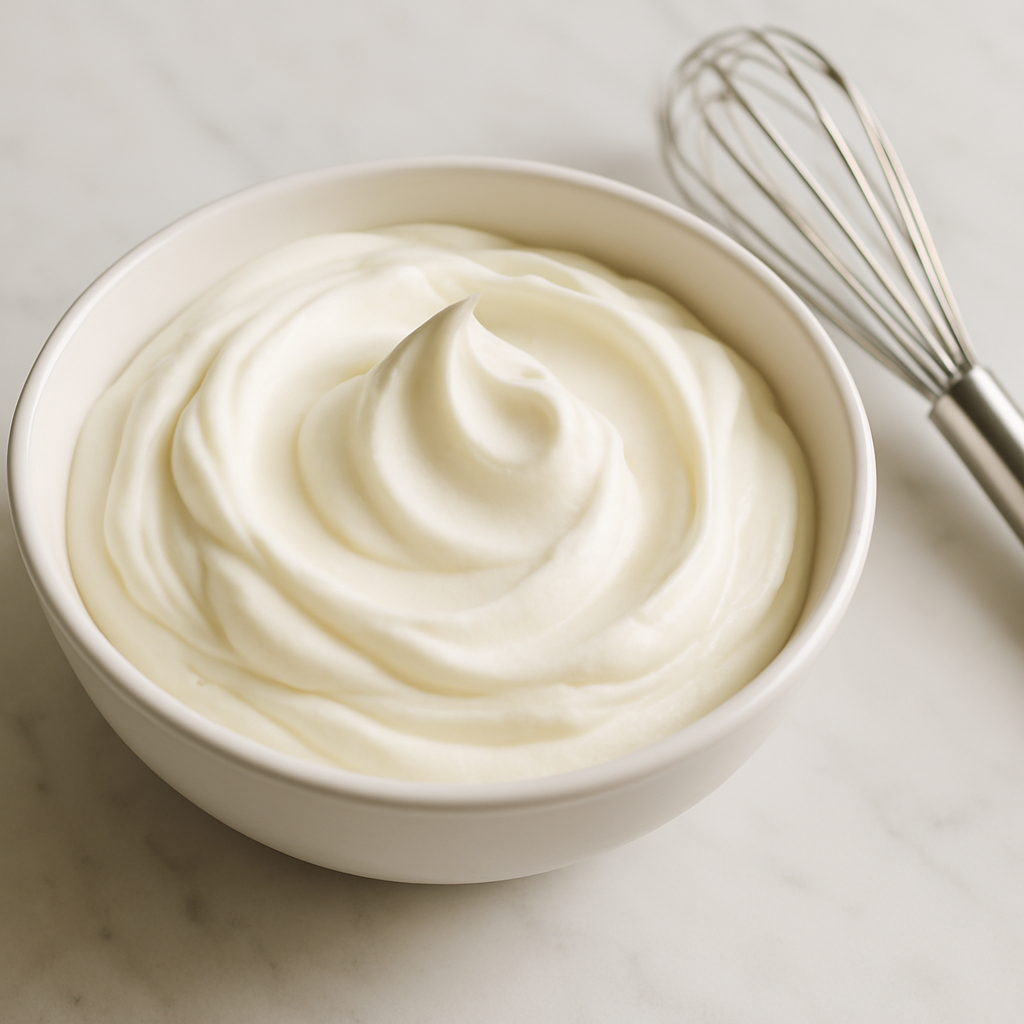
This is Chantilly cream. Sweetened whipped cream with vanilla. That’s it. But calling it “Chantilly” immediately makes it sound more elegant, and honestly, it is. This is the cream you see on top of fancy French desserts, dolloped on chocolate mousse, piped onto pastries, or served alongside fresh berries.
It’s named after the Château de Chantilly in France, where it’s associated with French culinary tradition and elegance. The actual origins are murky, but what matters is the technique: cold heavy cream whipped with powdered sugar and vanilla to soft, billowy peaks. Not stiff peaks like you’d use for a cake. Soft peaks that fold over gently when you lift the whisk.
The difference between regular whipped cream and Chantilly is simple. Regular whipped cream is just cream whipped to peaks. Chantilly cream is cream with sugar and vanilla whipped to soft peaks. The vanilla is what makes it distinctly French. The soft peaks are what make it spoonable and luxurious instead of stiff and piped.
This is the cream that belongs on top of everything worth eating.
- 1 cup heavy cream (cold
- 1 tbsp powdered sugar (adjust to taste)
- 1/2 tsp vanilla extract
Chill Equipment: Place your mixing bowl and whisk or beaters in the freezer for 10-15 minutes. You want everything cold. The colder the equipment, the faster and better the cream whips. Don't skip this step.
Combine Ingredients: Pour cold heavy cream into the chilled bowl. Add powdered sugar and vanilla extract. Start with 1 tablespoon of sugar if you want less sweet cream, 2 tablespoons for sweeter. You can always add more, but you can't take it out.
Whip to Soft Peaks: Using a hand mixer, stand mixer with whisk attachment, or a whisk, beat on medium-high speed. Watch the cream closely. It will start to thicken after about 2 minutes. Keep whipping until soft peaks form—when you lift the beater, the peak should hold its shape but the tip flops over gently. This takes 3-5 minutes with an electric mixer, longer by hand. Do not overbeat. Stop when you see soft, billowy peaks, not stiff peaks. If you go too far, the cream becomes grainy. Go further and you'll have butter.
Use Immediately: Chantilly cream is best used right away. You can refrigerate it for 2-3 hours, but it may deflate slightly and separate. If it does, give it a quick gentle whisk to bring it back together. Do not store overnight—it doesn't hold well. Make it fresh when you need it.
Yield: 1 cup of heavy cream yields about 2 cups of whipped Chantilly cream. It doubles in volume when whipped. If you need more, double the recipe. Don’t try to whip more than 2 cups of heavy cream at once in a standard bowl—it won’t whip properly. Work in batches.
Powdered Sugar vs Granulated: Always use powdered sugar. Granulated sugar doesn’t dissolve in cold cream and you’ll have a grainy texture. Powdered sugar dissolves instantly and contains cornstarch, which helps stabilize the cream slightly. This is non-negotiable.
Vanilla Options: Vanilla extract is standard. For richer flavor, use vanilla bean paste or scrape the seeds from half a vanilla bean and add them to the cream. The little black specks look elegant and the flavor is deeper. If using vanilla bean, add it with the cream and sugar before whipping so the seeds distribute evenly.
Don’t Overbeat: This is the most common mistake. Overbeaten cream turns grainy, then clumpy, then becomes butter. Watch closely as you approach soft peaks. The moment you see the peaks holding shape but flopping over at the tip, stop. It’s better to underbeat slightly than overbeat. You can always whip a bit more. You can’t fix overbeaten cream.
Testing for Soft Peaks: Lift your whisk or beater straight up out of the cream. The peak that forms should stand up but curl over at the top. If it stands straight up without curling, you’ve gone to stiff peaks—too far. If it doesn’t hold any shape at all, keep whipping.
Why It Doesn’t Hold Long: Chantilly cream is unstabilized. It’s just cream, sugar, and vanilla. Over time, the liquid separates from the fat and you get a watery layer at the bottom. This is normal. It’s meant to be fresh. If you need whipped cream that holds for days, you need to add gelatin or cream cheese to stabilize it. But that’s not traditional Chantilly.
Storage: If you must store it, refrigerate in an airtight container for up to 2-3 hours. Before using, give it a gentle whisk to bring it back together if it’s separated slightly. Don’t whisk vigorously or you’ll overbeat it. Just a few gentle stirs. If it’s been more than 3 hours, make fresh cream.
Cold Kitchen, Cold Cream: If your kitchen is hot, the cream will take longer to whip and may not hold well. In summer, place your mixing bowl over a larger bowl filled with ice while you whip. This keeps everything cold and helps the cream whip faster. The French do this. You should too.
Bowl Size: Use a bowl that’s larger than you think you need. Cream expands significantly as it whips, and you need room to move the whisk without splattering cream everywhere. A 2-quart bowl is good for 1 cup of cream.
Hand Whipping: You can absolutely whip this by hand with a whisk. It takes about 8-10 minutes of steady, vigorous whisking. Your arm will get tired. But it works, and some people prefer the control. The result is the same as using a mixer.
Flavor Variations
Chocolate Chantilly: Add 1 tablespoon unsweetened cocoa powder with the sugar. Sift it first so it doesn’t clump.
Liqueur Chantilly: Add 1 tablespoon Grand Marnier, Kahlua, rum, or Amaretto with the vanilla. Reduces sweetness slightly, adds depth.
Almond Chantilly: Replace vanilla extract with 1/2 teaspoon almond extract. Pairs beautifully with stone fruit or berries.
Citrus Chantilly: Add 1 teaspoon finely grated lemon, lime, or orange zest with the sugar. Fresh and bright.
Maple Chantilly: Replace powdered sugar with 2 tablespoons pure maple syrup. Whip until soft peaks form. The texture is slightly different but delicious. For Stabilized Chantilly (Holds Longer): Add 1 tablespoon mascarpone or cream cheese to the cream before whipping. Or add 1 teaspoon cornstarch mixed with the powdered sugar. This helps it hold for 6-8 hours without separating. Not traditional, but practical if you’re making it ahead for a party.
When to Use Chantilly Cream: Top of chocolate mousse (classic pairing) Filling for layer cakes or cream puffs Topping for fruit tarts or pies Dolloped on fresh strawberries, raspberries, or any berries With crepes or waffles On top of hot chocolate or coffee drinks Served alongside warm fruit crisps or cobblers Piped onto eclairs or mille-feuille As a lighter alternative to buttercream frosting
Troubleshooting: Cream won’t thicken: Your cream or equipment wasn’t cold enough. Put everything back in the fridge for 15 minutes and try again. Or your cream is ultra-pasteurized—it doesn’t whip as well as regular pasteurized cream. Check the label. Cream is grainy: You overbeat it. Stop immediately. You can’t fully fix this, but you can gently fold in a tablespoon of fresh unwhipped cream to smooth it slightly.
Cream turned to butter: You went way too far. Start over. There’s no fixing butter. Use the butter on toast, don’t waste it. Cream is too sweet: You used too much sugar. Next time use 1 tablespoon instead of 2. You can fold in a little unsweetened whipped cream to cut the sweetness, but it’s hard to fix.
Cream deflated: It’s been sitting too long or it got warm. Give it a few gentle whisks to bring it back. If it’s separated into liquid and fat, it’s too far gone. Make fresh cream. Cream tastes like nothing: You didn’t add enough vanilla or sugar. Taste the cream while you’re making it. Adjust as you go. It should taste sweet and vanilla-forward, not bland.
French Technique: The French are particular about Chantilly cream. It must be cold, it must be whipped to soft peaks, and it must be fresh. They don’t make it hours ahead. They make it just before serving. This is a technique worth respecting. Fresh Chantilly cream tastes like cream—sweet, clean, light. Old whipped cream tastes flat and watery. Make it fresh.