Winter Citrus Salad · Grapefruit, Orange, Fennel, Candied Pecans
This is a bright, refreshing salad for the cold months when citrus is at its peak. Grapefruit and orange segments bring sweetness and acidity, shaved fennel adds a subtle anise flavor and crunch, and candied pecans provide sweetness and texture. The arugula base is peppery and slightly bitter, which plays beautifully against the sweet citrus and licorice notes of the fennel.
The citrus vinaigrette ties everything together – made with fresh orange juice, olive oil, Dijon, and a touch of honey. It’s bright and tangy without being harsh. This salad feels light but substantial, and the combination of flavors and textures keeps every bite interesting. It works as a starter for a winter dinner or as a side to roasted chicken or pork.
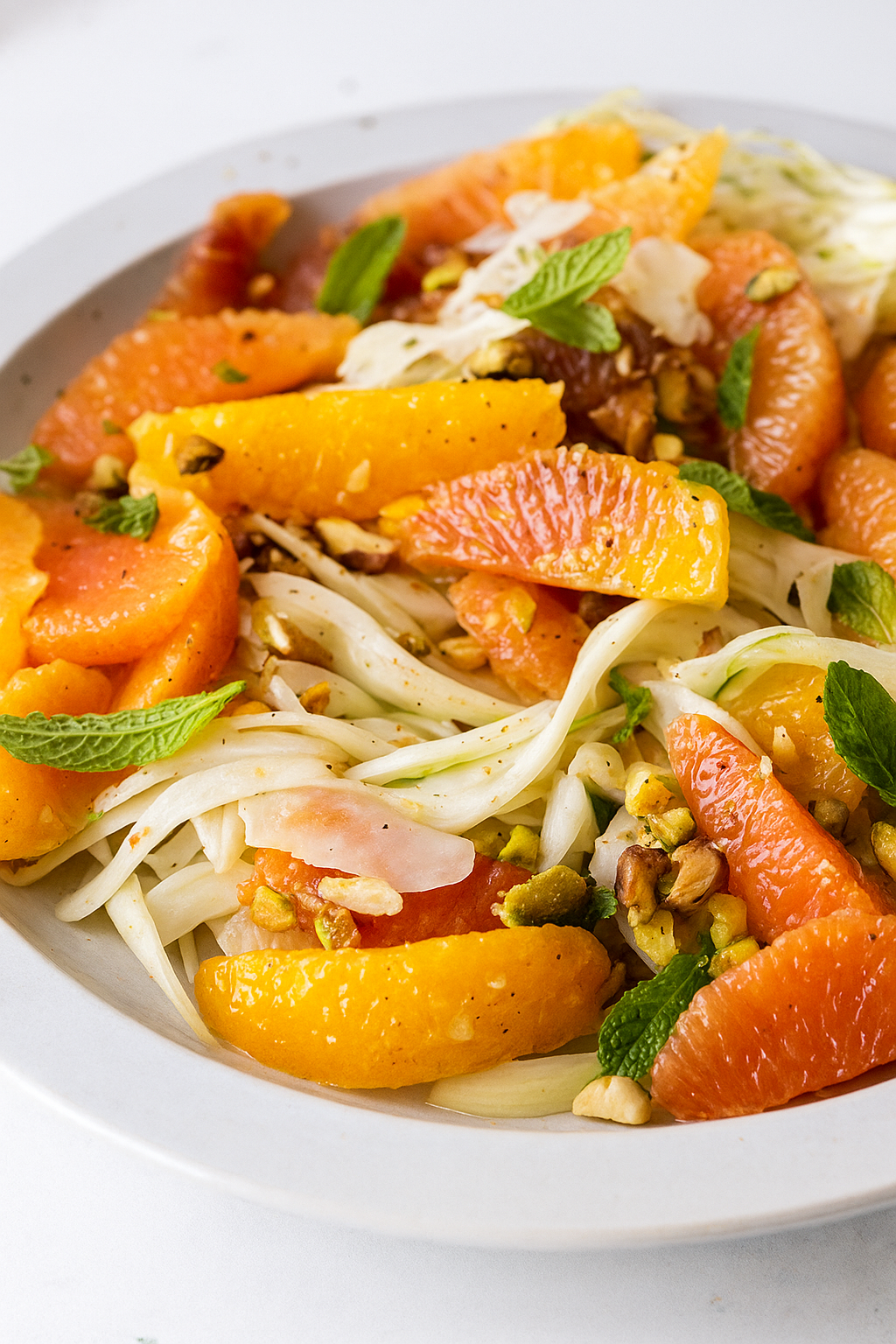

Winter Citrus Salad · Grapefruit, Orange, Fennel, Candied Pecans
Peppery arugula with citrus segments, shaved fennel, candied pecans, and citrus vinaigrette.
Ingredients
Method
Supreme the Citrus
- Supreming citrus means cutting out the segments without any pith or membrane – you want just the pure fruit. It takes a few extra minutes but makes a huge difference in texture and appearance.
- For each grapefruit and orange: Cut off the top and bottom so the fruit sits flat on your cutting board. Using a sharp knife, cut down the sides of the fruit following the curve, removing all the peel and white pith. You want to expose the flesh completely.
- Hold the peeled fruit in your hand over a bowl (to catch the juice). Use a paring knife to cut along each membrane, releasing the segments into the bowl. Work your way around the fruit until all the segments are out. Squeeze the leftover membranes over the bowl to extract any remaining juice – you’ll use this for the vinaigrette.
- Set the citrus segments aside. Reserve 3 tablespoons of the mixed citrus juice for the vinaigrette.
Shave the Fennel
- Trim the stalks and fronds from the fennel bulb (save a few fronds for garnish if you like). Cut the bulb in half through the core, then cut out the tough core from each half.
- Using a mandoline set to the thinnest setting, carefully shave the fennel into paper-thin slices. If you don’t have a mandoline, use a very sharp knife to slice it as thin as possible. You want about 1 cup of shaved fennel.
- Place the shaved fennel in a bowl of ice water and let it sit for 10 minutes. This crisps it up and mellows the raw flavor slightly. Drain well and pat dry before using.
Make the Citrus Vinaigrette
- In a small bowl or jar, combine the orange juice, lemon juice, Dijon mustard, and honey. Whisk or shake to combine.
- Slowly drizzle in the olive oil while whisking constantly (or shake vigorously in a jar with a tight-fitting lid). The vinaigrette should emulsify and thicken slightly. Taste and season with salt and pepper. It should be bright, tangy, and slightly sweet.
- If the vinaigrette is too acidic, add a bit more honey or olive oil. If it’s too mild, add a squeeze more lemon juice.
Assemble the Salad
- Place the arugula in a large mixing bowl. Drizzle about half of the citrus vinaigrette over the greens and toss gently to coat. You want the arugula lightly dressed, not drowning. Save the remaining vinaigrette for drizzling over the finished salad.
- Divide the dressed arugula among four plates or bowls. Arrange the grapefruit and orange segments over the arugula – distribute them evenly so each serving gets a good mix of both.
- Scatter the shaved fennel over each salad. Add a generous handful of candied pecans to each serving.
- Drizzle the remaining citrus vinaigrette over the top. Finish with a pinch of flaky sea salt and a few cracks of black pepper.
Serve
- Serve immediately. The citrus and fennel will release liquid as they sit, so this salad is best eaten right after assembly.
Notes
The combination of peppery arugula, sweet-tart citrus, anise-flavored fennel, and sweet candied pecans hits every note – bitter, sweet, sour, savory, crunchy, tender. Each component brings something different to the plate, and together they create a salad that’s complex and interesting without being fussy.
Supreming the citrus is worth the effort. Biting into a citrus segment with no membrane or pith is a completely different experience than eating a citrus wedge. The texture is clean and the flavor is pure fruit with no bitterness. It elevates the salad from casual to refined.
The fennel adds a subtle licorice flavor and crisp texture. Shaving it thin on a mandoline makes it tender enough to eat raw without being tough or fibrous. Soaking it in ice water mellows the flavor and makes it extra crisp.
The candied pecans provide sweetness and richness that balance the bright acidity of the citrus and vinaigrette. They also add necessary crunch – without them, the salad would be all soft textures.
Citrus Selection
Use ripe, sweet citrus. In winter (December through March), grapefruit and oranges are at their peak – sweet, juicy, and flavorful. Look for fruit that feels heavy for its size (more juice) and has thin, smooth skin.
For grapefruit, pink or ruby red varieties are sweeter and less bitter than white grapefruit. For oranges, blood oranges, Cara Cara, or navel oranges all work beautifully. Blood oranges add stunning color if you can find them.
Avoid citrus that feels light or has thick, bumpy skin – it will be dry and less flavorful.
Fennel Prep
A mandoline makes shaving fennel easy and ensures paper-thin, uniform slices. If you don’t have one, a very sharp knife and patience will get you there. The thinner you slice it, the more tender and delicate it will be.
Soaking the shaved fennel in ice water is optional but recommended. It crisps the fennel and removes some of the raw, assertive flavor. If you skip this step, the fennel will be more pronounced – which some people prefer.
Save the fennel fronds (the feathery green tops) for garnish. They’re pretty and add a bit of extra fennel flavor.
Vinaigrette Balance
The vinaigrette is more acidic than a standard vinaigrette because the salad components (citrus, fennel) are already sweet and mild. The bright, tangy dressing cuts through the sweetness and ties everything together.
Use good quality extra virgin olive oil. The vinaigrette is simple, so the quality of the oil matters. Fruity, peppery olive oil complements the citrus and arugula beautifully.
Make the vinaigrette right before serving. Citrus juice oxidizes and loses its bright flavor if it sits too long. Fresh vinaigrette tastes best.
Arugula Alternative
If you don’t like arugula’s peppery bite, substitute butter lettuce or a mild spring mix. The salad will be sweeter and more delicate. Arugula is my preference because its bitterness balances the sweet citrus and candied pecans, but use what you like.
Make-Ahead Tips
Supreme the citrus up to a day ahead. Store the segments in their juice in an airtight container in the refrigerator.
Shave the fennel a few hours ahead. Keep it in ice water in the refrigerator, then drain and pat dry before assembling the salad.
Make the vinaigrette up to a day ahead. Store it in a jar in the refrigerator and shake well before using. The olive oil may solidify in the cold – let it come to room temperature before serving.
Don’t dress the arugula or assemble the salad until you’re ready to serve. Once dressed, arugula wilts quickly.
Scaling Up or Down
This recipe serves 4 as a starter or side salad. To scale up, multiply the ingredients proportionally. The vinaigrette comes together quickly, so making a larger batch is easy.
For a lighter starter, reduce the portion size and serve smaller plates. For a more substantial salad, add crumbled goat cheese or ricotta salata.